Showing posts with label Traditions. Show all posts

Sunday, 28 March 2021

Have a sustainable Easter!

It's one week until Easter and with lots of Easter egg hunts and games being planned, there is a risk of creating unnecessary waste and buying items that will be single use only.  Tonnes of packaging, toys and decorations are thrown out each year on festive days such as Easter, but with some sensible shopping choices and more crafty thinking, you can still have the same amount of fun but with less impact on the environment.

Here are some useful ideas or choices you can make when celebrating Easter this year:
πŸ₯ Many chocolate brands are selling chocolate eggs without plastic packaging now; make sure you look for these and recycle the foil and cardboard appropriately
πŸ₯  Buying ethical chocolate is also important;  look for brands that have Fairtrade or Rainforest Alliance logos, or that are made without palm oil (often found in chocolate products as an emulsifier)
πŸ₯ Try to make long-lasting or reusable decorations out of paper or material; keep them safe and remember to take them out each year
πŸ₯ Make an Easter egg trail using painted stones; these can be used over and over, or you can even get children to paint their own stones!
πŸ₯ Try making your own natural dyes and use them to colour egg shells and make patterns; cabbage, spinach, turmeric and blueberries work really well
πŸ₯ Have a go at making your own hot cross buns; they're easy to do and just need a little bit of time to allow the dough to rise;  BBC Good Food has some good recipes
πŸ₯ When planning an Easter meal, try to think about where the food is coming from and buy local/seasonal as much as you can
πŸ₯ And finally, get outside and see what nature is doing at this time of year!  If you have a local farm, go and visit and see the newborn animals and buy some local produce while you're there

πŸ₯πŸ°πŸ‘’ Happy Green Easter! πŸ‘’πŸ°πŸ₯

Sunday, 14 March 2021

Friluftsliv

If anyone's good at embracing the outdoors, it's the Scandinavians. "Det finnes ikke dΓ₯rlig vΓ¦r, bare dΓ₯rlig klΓ¦r!" - "There's no bad weather, only bad clothes!" There's a lot to be said for this approach, and (aside from cases of extreme weather!) encouraging children to play outside every day and develop resilience is an important life skill.

Friluftsliv is another Nordic word/concept/expression which we can learn a lot from.  Literally translated, it means 'open-air living'.  This means getting outside everyday no matter the season, weather or what mood you're in.  This is generally a part of Nordic culture where there is an emphasis on spending time in nature and being close to greenery, forests and water.  Historically, this may have meant spending extended periods of time in the great outdoors, but nowadays it can mean spending a part of every working day or school day outside, either as part of or in addition to the normal outdoor recreation time.  

In Norway, Friluftsliv is included into the school curriculum.  This means that all children will be taught in an outdoor setting and will learn the skills needed to have adventures and stay safe when outside; this includes skills such as swimming, orienteering, building a shelter, foraging safely for food, using tools, and practising simple first aid techniques.  Some of the teachings come from the Sami people (who are indigenous to Scandinavia) and their traditions, which helps children to understand their culture and develop in a more rounded way.  This approach has been shown to improve social, emotional, physical and cognitive development in children and teenagers. 

The English curriculum includes some outdoors education but this is generally in the context of sport rather than learning about the outdoors. Forest Schools are becoming increasingly prevalent but this is mainly in the primary school setting.  Why not think about adopting some of the ethos of friluftsliv and include it in your curriculum?  What benefits could it bring to both the children and staff at your school?

Sunday, 28 February 2021

Planting blossom trees

We are approaching blossom season! 🌸🌸🌸

To boost the amount of blossom trees in the UK, the National Trust is pledging to plant hundreds of blossom trees at different sites including London, Nottingham, Newcastle and Plymouth.  These will include varieties such as cherry, hazel and plum which all give beautiful pink flowers in the spring.  The project is hoping to boost nature in these areas where there is currently not much access to green space and to give people a closer connection to the natural world. 

The inspiration for this has come from Japan where each spring they have "Hanami" - the celebration of flowers at the arrival of spring.  Trees are in bloom everywhere you look and it creates quite a spectacle which people travel from far and wide to see.  By boosting the number of trees (particularly blossoming trees) it is hoped that it will create a similar spectacle in the UK and draw people's attention to the beauty of nature.  Many populations live in 'grey deserts' in the UK where there are large areas of no trees or green space, and this can have an impact on people's mental health, and their appreciation and respect for the natural world.  

Blossom is also plays an important in supporting ecosystems.  An abundance of pollen increases the number of pollinating insects such as bees, wasps, beetles and flies.  These in turn feed birds in the local area who can further spread pollen and seeds.  When looked at together, these behaviours all help to make a richer environment that can support a more diverse wealth of wildlife.  

Why not think about planting some blossoming trees in your garden or school?  The sight of blossoming trees can spark interest in young children and help them to understand the life cycle of trees and the seasons. You could even incorporate these events in to lessons, and do some research into places like Japan who have amazing blossom events every year!

To find out more, visit the BBC to learn about the blossom planting project; or kiddle to find out more about Japan's seasonal blossoming 🌸🌸🌸

Sunday, 25 October 2020

Pumpkins in the fall

Pumpkins are a huge tradition around the fall or autumn time, and are often associated with harvest festival celebrations, Thanksgiving, and Halloween. But what do we know about pumpkins and where do these traditions come from? πŸŽƒ

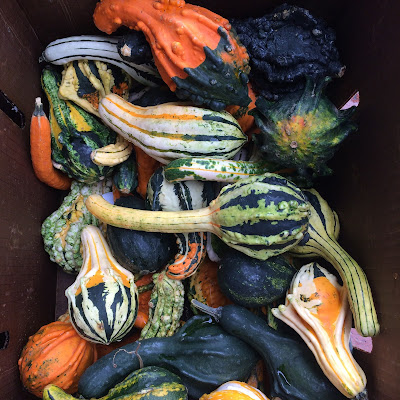
Pumpkins are thought to have originated from Central America around 7,500 years ago, however they are now grown successfully all over the world and form a large part of autumn celebrations in North America and Europe.  They are technically a type of squash and can come in all different shapes, sizes and colours!  The most classically well-known orange pumpkins are actually called Connecticut Field Pumpkins or Harvest Moon pumpkins and these are usually used at Halloween because they are so good for carving.

Making Jack-o'-lanterns or carved pumpkins started in Ireland in 19th century where they carved faces out or turnips or mangel wurzels to ward off evil spirits.  This practice became part of Halloween celebrations where they were used to represent supernatural beings on the eve of All Hallows or All Saints and is now synonymous with Halloween wherever it is celebrated. 

Pumpkins also play a huge role in the American tradition of Thanksgiving.  The Pilgrims apparently ate pumpkins and squashes that were native to New England and so gradually they became added to the Thanksgiving meal either as a savoury dish such as mashed pumpkin, or a sweet dish in the form of pumpkin pie. 

A huge number of pumpkins are grown every year around the world.  Around 700,000 tonnes of pumpkins are produced in the US each fall, but the number grown in China far exceeds this with around 8.1 million tonnes harvested each year.  Sadly, many of these pumpkins are wasted as they are used for carving and decoration and then discarded into landfill.  We can make more sustainably choices however, if we try to choose varieties that are more edible so the flesh, seeds and skin are not wasted.  We can also make sure we compost any leftover pumpkin or put it out for birds, squirrels and foxes who may benefit from the extra food source at this time of year.  Roasting the seeds is another good option for making the most of the pumpkin's inner contents.  Finally, try to buy pumpkins from a local farm as this minimises the transport costs and emissions and supports local businesses.  And it's sure to be a fun day out too!

To find out more, click here to read about pumpkins and the issue of unsustainability.
To find out how to use your pumpkin once Halloween is over, click here for some ideas!
πŸŽƒ